Each year, the World Intellectual Property Organization (WIPO) ranks the innovation performance of countries in its Global Innovation Index. The 2026 edition was released in Geneva on 29 September. As in recent years, Europe looks strong at the top of the table. But the report itself paints a more mixed picture, and its special theme this year concerns a problem that will be familiar to anyone working with research-based companies.
Strong research, slower growth
Switzerland, Sweden and the United States rank first, second and third among 139 economies. Fourteen of the top 25 are European.
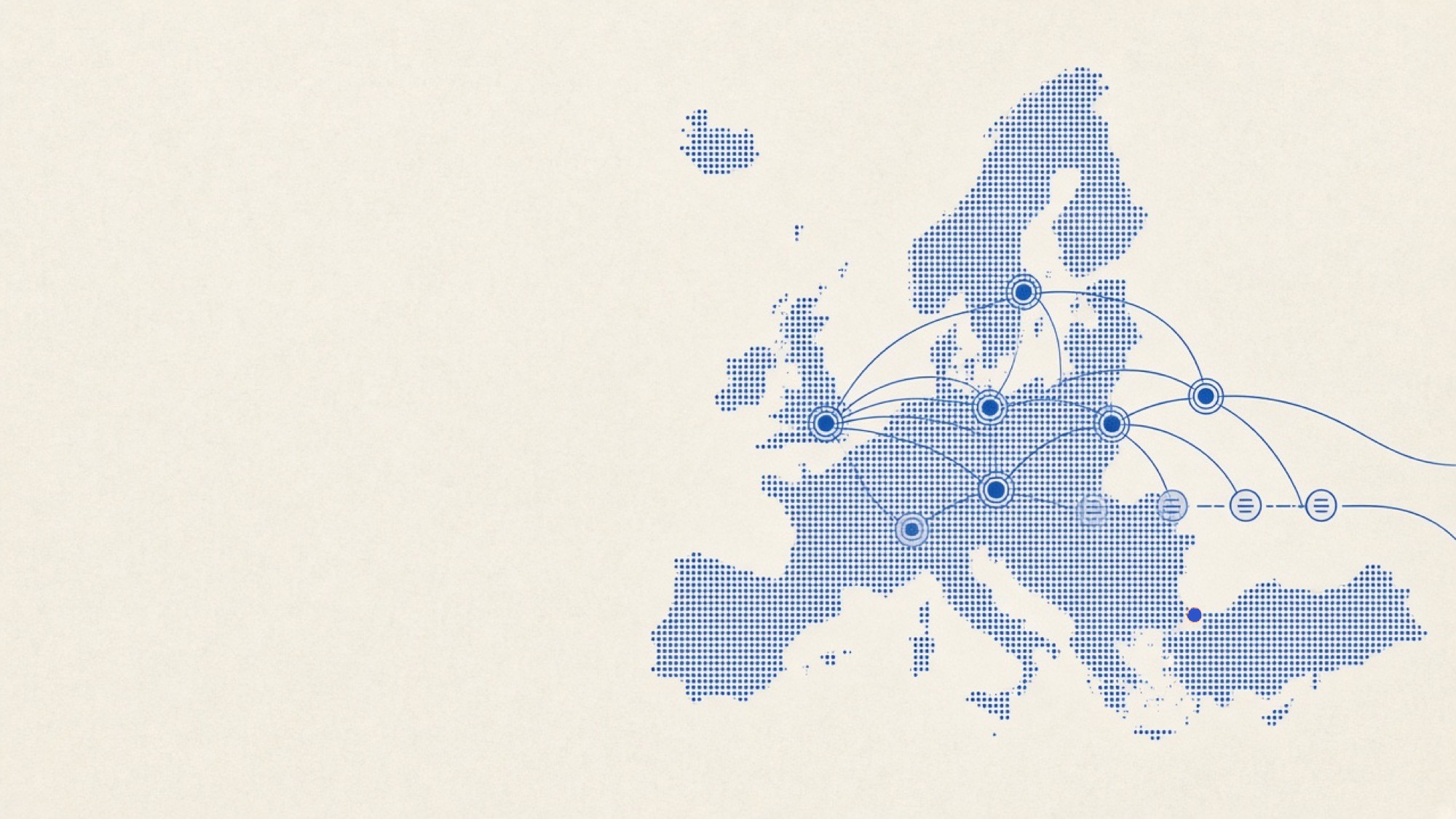
WIPO nevertheless describes Europe’s central challenge as turning its research and industrial strengths into fast-growing firms, scale-up finance and productivity growth. Europe has world-class research, strong institutions and dense innovation clusters, the report notes, but its long-term competitiveness depends on converting these into larger and faster-growing outcomes. WIPO points out that the same conclusion has been drawn in the Letta and Draghi reports on European competitiveness.
30,000 science-based start-ups
This year’s special theme looks at so-called deep science start-ups: young companies built on scientific research in fields such as life sciences, semiconductors, robotics, space, energy and advanced materials. To map them, WIPO and the data company Dealroom built a new database, which they describe as the first global overview of its kind.
It identifies more than 30,000 such companies founded since 2000, together worth an estimated USD 7.6 trillion. Their number is 9.5 times higher than in 2010, and in 2025 they accounted for 16 percent of all venture-backed start-ups, the highest share in fifteen years.
Europe is well represented. The United Kingdom has the third-highest number of deep science start-ups, after the United States and China, and Estonia’s grew faster than any other country’s between 2020 and 2025.
Two characteristics stand out. Many of the companies come straight out of universities: over 40 percent of energy and life sciences ventures founded since 2010 are academic spin-outs. And they take time to reach the market. Because years often pass between invention and first sales, patents are frequently the only asset the company can show investors. Half of deep science start-ups hold patents, compared with 15 percent of other start-ups.
Three points where companies stall
The report’s central finding is that these companies, even when financing is plentiful, tend to stall at the same three points:
- moving from research results to a proof-of-concept that investors can assess
- moving from a pilot to commercial deployment
- moving from a working technology to a profitable company
At these points, several problems reinforce each other: a shortage of later-stage funding rounds, regulatory obstacles, a lack of skilled staff and uncertain demand. WIPO’s conclusion is that the main constraint today is not inventing new technology, but turning it into industry.
For Europe, which is strong in research but weaker in scaling, that conclusion is particularly relevant.
What WIPO recommends
The report’s recommendations are concrete. WIPO argues that funding must cover every stage, from proof-of-concept grants and pilot facilities to long-term capital for later stages. On the demand side, it highlights public procurement based on functional requirements, purchase commitments and programmes in which a public body acts as a first major customer. It also stresses the support around the research itself: professional technology transfer, shared laboratories and test facilities, regulatory sandboxes and better opportunities to use patents as a basis for financing.
One recommendation concerns how such policies are designed and followed up. According to WIPO, policy should start from a diagnosis of where companies stall, and measure results further down the line, such as whether companies attract follow-on investment, rather than counting the number of programme activities.
The report also makes a broader point: success depends less on how much is invested than on how well research, companies, finance, skills and institutions are connected. The priority, WIPO writes, is coherence across the system rather than higher spending or a better ranking.
Why this matters locally
Much of what WIPO describes is carried out by organisations close to the companies: technology transfer offices, incubators, science parks, clusters and regional development agencies. They run proof-of-concept programmes, provide test environments and help researchers become founders.
WIPO’s call to start from where companies stall raises a practical question for them. To know that, someone needs to follow companies through each stage: from the first contact with a research team, through spin-out and first funding, to the point where the company either grows or stops. These stages can be years apart, and companies often leave a support programme long before the next one arrives.
Much of the information that could answer the question already exists, in the support organisations’ own records and in public registers of companies, funding and patents. Whether it is brought together determines whether the diagnosis WIPO calls for can actually be made.